


 Check Your Eligibility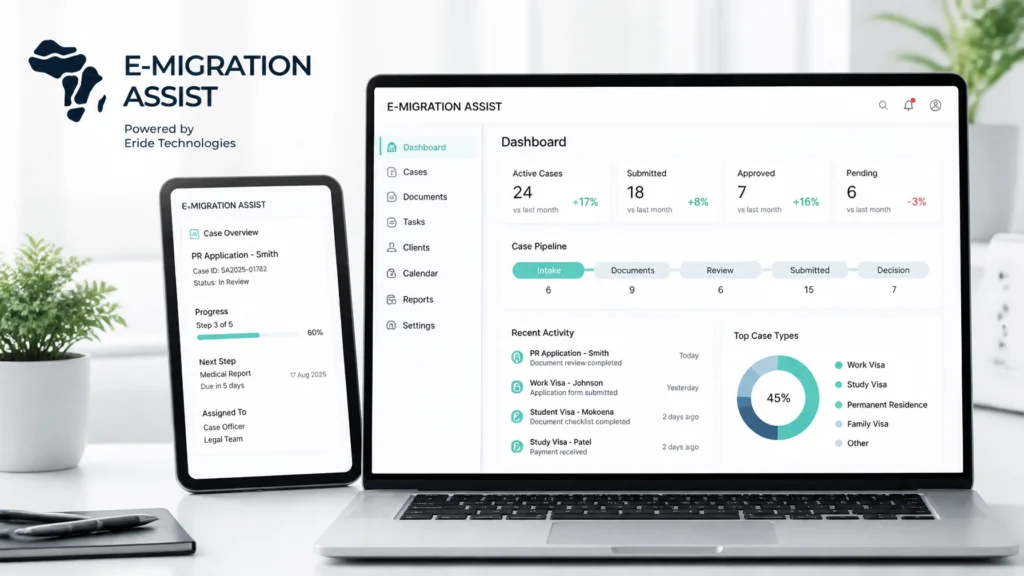
Caption:
Can your organisation prove its TES Phase II position: or only explain it?
The 80-point threshold matters. But the real work is building a clear, reviewable evidence trail before the 4 September 2026 deadline.
The Trusted Employer Scheme (TES) Phase II window gives eligible employers an opportunity to demonstrate their readiness to support skilled international recruitment in South Africa.
The headline number is familiar: a minimum threshold of 80 points out of 100.
But 80 points is not a guarantee of selection. It is not a shortcut around scrutiny. It is not a substitute for complete, consistent evidence.
The operational question is more useful:
Can your organisation connect every relevant claim to the right record, the right role, the right approval and the right document version?
That is where preparation becomes decisive.
The Department of Home Affairs Trusted Employer Scheme page provides the scheme background, including the purpose of vetting employers before they use a simplified route for skilled foreign workers. The TES selection criteria also shows why evidence quality matters.
For employers, legal practices and immigration professionals, this is a case-management problem as much as it is an immigration problem.
The problem: treating the threshold as the application
A points threshold can create false confidence.
An employer may believe that a quick calculation is enough. A team may identify several strong areas and assume the submission is ready. A spreadsheet may show “80+” while the supporting documents remain scattered across email accounts, shared drives and personal folders.
That is the old way.
: Claims are recorded without a source document.
: Records exist, but nobody knows which version is current.
: Company information conflicts across forms, reports and attachments.
: Role details are copied from outdated job descriptions.
: Internal approvals happen verbally and leave no audit trail.
: Legal or immigration professionals spend time chasing files instead of reviewing them.
: The deadline arrives before the evidence pack is complete.
A score estimate without evidence control is only an estimate.
The better approach is to treat the 80-point minimum as a readiness standard. Every relevant point must be supported by information that is accurate, current, attributable and easy to review.
That means less admin and more control.
What “80 points” means operationally
The threshold should prompt five practical questions.
1. What is the claim?
Start with the specific statement your organisation intends to rely on.
This might relate to investment, employment, sector activity, skills transfer or another applicable element of the Phase II framework. Do not begin with a vague folder called “TES documents”.
Create an evidence map.
For each claim, record:
- The claim being made.
- The evidence required to support it.
- The person responsible for providing it.
- The date the evidence was issued.
- The reviewer responsible for checking it.
- Any gaps, risks or follow-up questions.
- The final document version approved for submission.
This approach turns an unclear scorecard exercise into a controlled workflow.
2. Which company record supports it?
Company records should tell a consistent story.
Depending on the applicable pathway and requirements, employers may need to organise records relating to their South African operations, investment, workforce, sector activity, skills development or corporate compliance position.
Do not assume that a document is useful simply because it carries the company name.
Check whether it:
- Relates to the correct legal entity.
- Covers the relevant period.
- Uses consistent company information.
- Is complete and readable.
- Can be traced to a reliable internal source.
- Supports the claim without requiring excessive interpretation.
Examples may include corporate records, workforce reports, investment evidence, programme records, formal agreements, financial information or other supporting material requested for the assessment.
The important point is not to assemble the largest possible file. It is to assemble a relevant, organised and defensible file.
That creates clarity for the employer and gives the chosen legal or immigration professional a cleaner basis for review.
Evidence mapping is the central task
Evidence mapping is where strategy becomes execution.
Imagine that your organisation believes it can rely on an active skills-transfer programme. The next questions are immediate:
: Who owns the programme internally?
: What proves that it is active?
: Which beneficiaries or participants are covered?
: What dates apply?
: Who approved the supporting statement?
: Is the document final or still under review?
: Does another company record describe the programme differently?
The same logic applies to workforce information, investment records, sector classification and corporate documentation.
A useful evidence map does not merely list documents. It shows the relationship between the claim, the record, the reviewer and the submission.

A simple structure might include:
| Evidence area | Practical control |
|---|---|
| Company records | Confirm legal entity, dates and source |
| Workforce data | Confirm headcount period and data owner |
| Investment records | Confirm amount, date, location and supporting proof |
| Skills-transfer records | Confirm active programme and approval |
| Role data | Confirm current job description and business need |
| Internal approvals | Record decision-maker, date and outcome |
| Document versions | Mark current, reviewed and superseded files |
This is not about creating bureaucracy for its own sake. It is about reducing avoidable omissions before they become submission problems.
The result is less admin and more control.
Role data should not be an afterthought
TES Phase II concerns employers. But the employer’s immigration workflow does not end with the Expression of Interest.
If the organisation is selected, the next stage may involve multiple skilled foreign national applications. That makes role data important from the beginning.
A role should not be represented by a job title alone.
The working file should, where relevant, capture:
- The exact job title.
- Core duties and responsibilities.
- Work location.
- Reporting line.
- Required qualifications and experience.
- Proposed start date.
- Employment terms.
- The business reason for the appointment.
- The relationship between the role and the employer’s workforce plan.
This information should be checked against the approved job description, offer documentation and related case records.
Why does this matter?
Because inconsistent role data creates friction. A job title in a recruitment system may differ from the title in an offer letter. A job description may describe duties that no longer match the position. A global mobility team may have one version while the legal or immigration professional receives another.
These inconsistencies are avoidable.
A structured case-management system gives each role a defined record. It also makes it easier to connect employer evidence to future employee cases without duplicating files or relying on memory.
Internal approvals need a visible trail
Many organisations have the right information but lack a clear approval process.
The HR team may confirm the workforce data. Finance may confirm investment records. Operations may confirm sector activity. Legal or compliance may review the risk position. An executive may approve the final submission.
If these decisions remain in separate email threads, the organisation has a weak control environment.
Build an approval workflow with clear ownership:
: Information requested.
: Information received.
: Initial review completed.
: Clarification requested.
: Revised evidence received.
: Legal or immigration professional review completed.
: Internal approval recorded.
: Final submission pack locked.
This does not replace professional advice. It supports it.
Your chosen immigration professional or legal practice can focus on the substance of the submission because the underlying records are already organised. Internal stakeholders can see what remains outstanding. Management can see whether the organisation is ready or still exposed to avoidable gaps.
That is the difference between a document collection and a controlled process.
Version control protects the submission
Version control may sound technical. In a deadline-driven immigration process, it is practical risk management.
A file named TES_final.pdf may not be final. A file named TES_final_v2.pdf may have been replaced by a later version in an email attachment. A signed document may be stored separately from the evidence it approves.
Use a clear naming structure.
For example:
EmployerName_EvidenceArea_DocumentType_Date_Version
Then apply simple rules:
- One approved source of truth.
- One document owner.
- One current version.
- Clear review status.
- Superseded files retained but labelled.
- Expiry or validity dates recorded.
- Reviewer comments linked to the relevant document.
- Final submission files locked before upload.

A version-controlled process reduces the risk of submitting an outdated report, an unsigned approval or an incomplete attachment.
It also creates a useful record after submission. If a question arises later, the organisation can identify what was submitted, who reviewed it and when it was approved.
The outcome is less confusion and more control.
The 4 September deadline requires an internal deadline
The official Phase II EOI deadline is 4 September 2026.
That should not be your team’s first deadline.
A strong internal process creates time for:
: Evidence collection.
: Data reconciliation.
: Missing-document follow-up.
: Professional review.
: Internal approval.
: Corrections.
: Final document locking.
: Submission confirmation.
Work backwards from 4 September. Assign owners. Track dependencies. Escalate unanswered requests. Keep a record of decisions.
Do not leave the final review to the last day. A late discovery that a record is incomplete, inconsistent or held by an unavailable stakeholder can affect the entire submission process.
The goal is not to rush an application into a portal. The goal is to arrive at the deadline with a submission that has been checked, approved and controlled.
The new way: powered infrastructure for immigration workflows
Manual processes can work for one document. They become fragile when an employer, HR team and professional adviser are managing multiple evidence areas and future visa cases.
E-Migration Assist provides AI-powered case-management infrastructure for South African immigration workflows. It supports employers and the industry without replacing the legal, immigration or professional advice provided by a firm’s chosen advisers.
The platform helps organisations and professionals work with:
- Structured workflows for consistent case progression.
- Secure document handling for sensitive employer and employee information.
- Requirements checklists that make outstanding actions visible.
- Tracking and decision logging for accountability and audit readiness.
- Human-reviewed guidance that adds clarity to complex immigration processes.
- Centralised case records that reduce duplication across teams.
For immigration practitioners and law firms, this can support a repeatable service model across corporate clients.
For employers and global mobility teams, it can provide a clearer operating layer between internal stakeholders and external professionals.
The technology is not the decision-maker. It is the powered foundation that helps people work with better structure, accuracy and control.
Ready for the threshold: and the work behind it?
The 80-point minimum is important. But the strongest preparation goes beyond the number.
It connects:
- The claim to the evidence.
- The evidence to the company record.
- The company record to the correct period.
- The role to the current business need.
- The decision to the authorised approver.
- The submission to the final document version.
That is how employers reduce avoidable omissions before 4 September 2026.
If your organisation, law firm or immigration practice needs a more structured way to manage employer evidence, visa cases, documents and approvals, explore E-Migration Assist for professionals.
Start with the exact free assessment CTA: https://emigration-assist.com/assessment
More structure. Less admin. More control.
This article is provided for general information and does not constitute legal or immigration advice. TES Phase II requirements, deadlines and administrative processes may change. Employers should confirm current information with the relevant authority and consult their chosen legal or immigration professional.
SEO keywords: Trusted Employer Scheme Phase II, TES Phase II South Africa, 80 points TES, South Africa work visa, South Africa immigration, employer compliance, global mobility South Africa, immigration case management software, corporate immigration workflow, document version control, skilled foreign workers South Africa, Trusted Employer Scheme deadline
Hashtags:
#TrustedEmployerScheme #TESPhaseII #SouthAfricaImmigration #SouthAfricaWorkVisa #GlobalMobility #EmployerCompliance #ImmigrationTech #CaseManagement #WorkPermitSA #CorporateImmigration #EMigrationAssist