


 Check Your Eligibility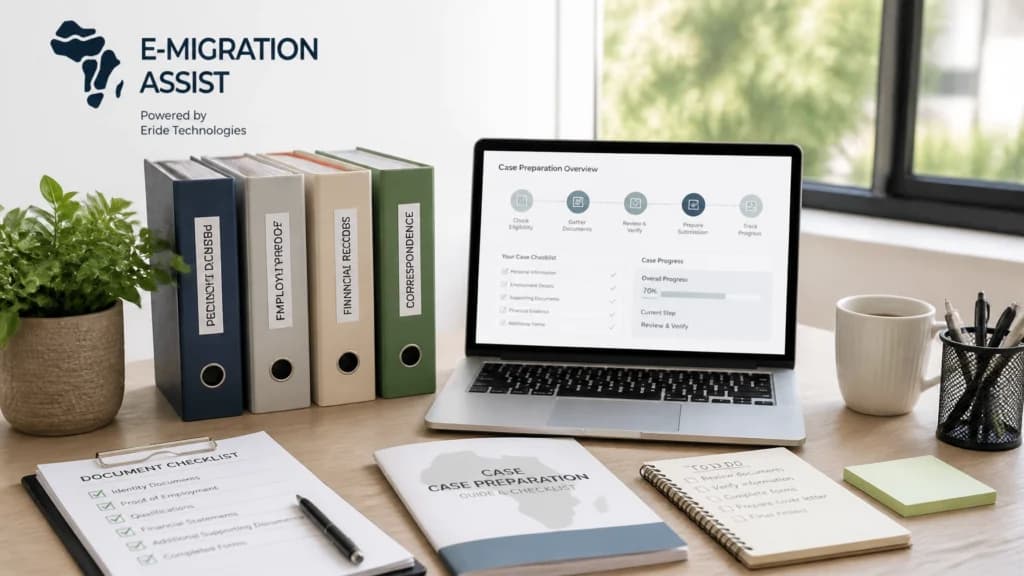
Think a South Africa visa waiver is a last-minute escape route? The stronger approach is calmer and more structured: understand the request, build the chronology, organise the evidence, and keep a clear record of every step.
A waiver or special application can feel intimidating.
The terminology is technical. The supporting documents may be personal. The timeline may already feel tight. It is easy to reach for a quick fix and hope that one urgent letter will solve everything.
That is the wrong mindset.
A South Africa visa waiver is not a panic button. It is a formal process that requires a coherent explanation, relevant evidence, and careful document control.
This article explains the process at a high level. It does not determine whether you qualify, predict an outcome, or replace legal advice. If you are considering a waiver or special application, speak to a qualified immigration professional or attorney about your circumstances.
What is a waiver or special application?
In broad terms, a waiver request asks the relevant authority to consider waiving a prescribed requirement in a particular immigration process.
The request is connected to a specific case. It is not a general permission to ignore visa requirements. It is not a guarantee that another part of the application will be accepted. It does not remove the need for accurate information and supporting documentation.
There may also be broader concessions or directives that apply to defined groups or circumstances. These are different from an individual waiver application. The legal basis, scope, documents, and process can vary.
That distinction matters.
: A general directive is not automatically an individual waiver.
: A pending request is not the same as an approved request.
: A motivation letter is not a substitute for supporting evidence.
: A document upload is not proof that the full case is ready.
The correct process depends on the facts, the visa category, the requirement in question, and the current rules.
For official background, consult the South African government’s visa information page and the Department of Home Affairs. For advice about your specific position, consult a qualified professional.
The first improvement is simple: replace urgency with structure.
The old way creates uncertainty
Many waiver files begin in a disorganised way.
A document is sent by email. Another is stored in a phone gallery. A third is buried in a WhatsApp conversation. Dates are remembered from memory. Previous visa documents are not reviewed together. The motivation is drafted before the full history is understood.
This creates avoidable risk.
: Missing dates
: Conflicting information
: Unclear status history
: Evidence that does not match the explanation
: Repeated requests for the same document
: No reliable record of who reviewed what
The problem is not always a lack of effort. Often, it is a lack of case infrastructure.
A strong file should allow a reviewer to understand the case without reconstructing it from scattered messages.
That is the standard to aim for: less searching, less guessing, and more control.
Start with the chronology
A chronology is the backbone of a coherent case file.
It should show what happened, when it happened, and which document supports each event. It does not need to be dramatic. It needs to be accurate.
Begin with the key dates:
- Entry into South Africa, where relevant.
- Previous visa or permit applications.
- Visa or permit issuance and expiry dates.
- Changes in employment, study, family, or personal circumstances.
- Relevant correspondence with authorities or application centres.
- Rejections, requests for further information, appeals, or waiver-related steps.
- The date on which the current request is being prepared.
Do not rely on memory alone.
Check passports. Review visa labels. Locate submission receipts. Compare emails. Confirm the dates on contracts, letters, certificates, and correspondence.
If a date is uncertain, do not quietly invent one. Mark it for verification.
A useful chronology can be presented as a table:
| Date | Event | Supporting evidence | Review status |
|---|---|---|---|
| Date | Application or status event | Passport, receipt, letter, or other record | Confirmed / to verify |
| Date | Change in circumstances | Contract, correspondence, or certificate | Confirmed / to verify |
| Date | Submission or communication | Receipt or email record | Confirmed / to verify |
The goal is not to produce paperwork for its own sake. The goal is to create a clear line from the facts to the request.

Explain the request precisely
A waiver motivation should answer a focused question:
What requirement is being discussed, and why is the request being made in this case?
That does not mean making broad claims. It means identifying the issue and explaining the relevant facts in a logical order.
A clear explanation generally connects:
: The requirement at issue
: The applicant’s relevant circumstances
: The reason the normal route cannot be followed, where applicable
: The evidence supporting those facts
: The practical context that a qualified adviser considers legally relevant
Avoid turning the letter into a life story with no structure. Avoid emotional language that cannot be supported. Avoid copying a generic template without adapting it to the case.
A professional adviser may also need to assess how the request interacts with the underlying visa category and other requirements. That is where legal and immigration advice becomes important.
E-Migration Assist does not make that legal assessment. It provides the infrastructure around the process:
- A structured workflow for the case
- A secure space for document collection
- A checklist for outstanding items
- A record of reviews and requests
- A decision log for important case events
The technology supports preparation. It does not replace professional judgment.
Evidence should prove the point
A document is useful when its connection to the case is clear.
Before uploading evidence, ask:
- What fact does this document support?
- Which date or event does it relate to?
- Is it current and legible?
- Does it contain information that conflicts with another document?
- Has a qualified adviser requested it for this case?
- Does it need certification, translation, or another form of verification?
Do not upload everything without a system. A large folder is not necessarily a strong file.
: Unnamed files slow review.
: Duplicate documents create confusion.
: Unreadable scans weaken clarity.
: Unexplained gaps invite questions.
: Unverified documents create uncertainty.
Use meaningful file names. For example:
2026-08-27_Passport_BioPage.pdf2026-08-27_Employment_Contract.pdf2026-08-27_Waiver_Motivation_Draft.pdf
Keep the original document where appropriate. Upload the clearest version. Record whether it has been reviewed, whether something is missing, and what action is required next.
This is where immigration case management software can change the quality of a workflow. The platform should not merely store files. It should connect documents to stages, requirements, owners, and decisions.
Why last-minute submissions create uncertainty
Last-minute preparation does more than create stress.
It reduces the time available to identify gaps. It makes it harder to obtain corrected documents. It increases the likelihood of inconsistent dates. It can leave a professional adviser reviewing a file under unnecessary pressure.
The result is often a rushed submission that still requires follow-up.
: The passport copy is missing a page.
: The supporting letter refers to the wrong date.
: The evidence is present but not labelled.
: The chronology does not match the application form.
: A key request has not been clearly explained.
A better process begins before the deadline becomes urgent.
Set internal milestones:
- Intake: capture the facts and identify the case objective.
- Chronology: verify dates and previous status information.
- Document collection: request and upload evidence securely.
- Review: check completeness, consistency, and clarity.
- Professional assessment: obtain legal or immigration advice where required.
- Submission preparation: assemble the final pack and record the action.
- Tracking: monitor progress and log correspondence or decisions.
The exact steps will depend on the case. The principle does not change: build in time for review.

How E-Migration Assist supports the case file
For an individual, the process can feel overwhelming because every document appears equally important.
For a professional adviser, the challenge is scale. Multiple clients may have different visa categories, deadlines, evidence requirements, and communication histories.
A spreadsheet may show a deadline. An inbox may contain a document. A shared drive may contain a draft. None of these creates a complete case record on its own.
E-Migration Assist brings the workflow together.
For individual travellers
- Follow a structured process from assessment to submission.
- Upload sensitive documents through a privacy-conscious portal.
- See which requirements are complete and which remain outstanding.
- Keep relevant correspondence and case activity in one place.
- Approach a qualified professional with a better-organised file.
Explore the traveller workflow or begin with the case assessment.
For professional firms and mobility teams
- Use repeatable workflows across relevant visa categories.
- Map documents to requirements and stages.
- Reduce back-and-forth with secure client uploads.
- Track multiple cases without relying on manual spreadsheets.
- Record reviews, actions, outcomes, and decisions in a central log.
See how the platform helps professionals manage immigration cases with structure.
The result is a powered foundation for accuracy, privacy, and operational control.
A better case file is built before the crisis
A waiver or special application should not begin with panic.
It should begin with questions:
: What is the request?
: What is the relevant history?
: Which dates must be verified?
: What evidence supports each important fact?
: Which issues require qualified legal or immigration advice?
: Where is the record of every action and decision?
You may not be able to control the authority’s decision or processing timeline. You can control the quality of your preparation.
A clear chronology makes the history easier to follow. A structured evidence set makes the explanation easier to test. A central workflow makes responsibilities and next steps visible.
That is the difference between the old way and the better way:
: Scattered emails become a controlled case record.
: Unnamed files become mapped evidence.
: Forgotten deadlines become tracked workflow stages.
: Rushed submissions become reviewed application packs.
: Uncertainty becomes visibility.
E-Migration Assist provides immigration case management software for South Africa-focused workflows. It helps individuals and professional advisers organise cases, documents, requirements, tracking, and decision logs in one privacy-conscious system.
It does not provide legal advice. It does not determine eligibility. It does not guarantee a visa waiver, visa, permit, or other immigration outcome. Those questions remain for qualified professionals and the relevant authorities.
But it can help you start with structure.
Begin your assessment with E-Migration Assist.
Less admin. More control. A better-prepared case file.
Frequently asked questions
Is a South Africa visa waiver the same as a visa?
No. A waiver request generally concerns a prescribed requirement within an immigration process. It is not the same as a visa and should not be treated as an automatic route to approval.
Can I prepare a waiver application without legal advice?
You may be able to organise information and documents yourself, but eligibility, legal strategy, and the application of current immigration rules are case-specific. Consult a qualified immigration professional or attorney before relying on a particular approach.
What should a chronology include?
It should include the key dates and events relevant to the case, together with the document that supports each event. The chronology should be factual, consistent, and easy to review.
Does E-Migration Assist decide whether I qualify?
No. E-Migration Assist provides workflow, document management, requirements tracking, and decision-log infrastructure. It does not provide legal or immigration advice and does not determine eligibility or outcomes.
What is immigration case management software?
Immigration case management software centralises case information, document collection, task tracking, workflow stages, client collaboration, and decision records. It replaces disconnected manual processes with a structured system.
SEO keywords: South Africa visa waiver, visa waiver application South Africa, special application South Africa immigration, South African immigration documents, immigration case management software, visa application document management, immigration workflow software, South Africa visa application support, immigration compliance software, case tracking for immigration professionals.
Hashtags: #SouthAfricaVisa #VisaWaiver #SouthAfricanImmigration #ImmigrationCaseManagement #ImmigrationTechnology #LegalTech #GlobalMobility #VisaApplication #ImmigrationCompliance #EMigrationAssist