


 Check Your Eligibility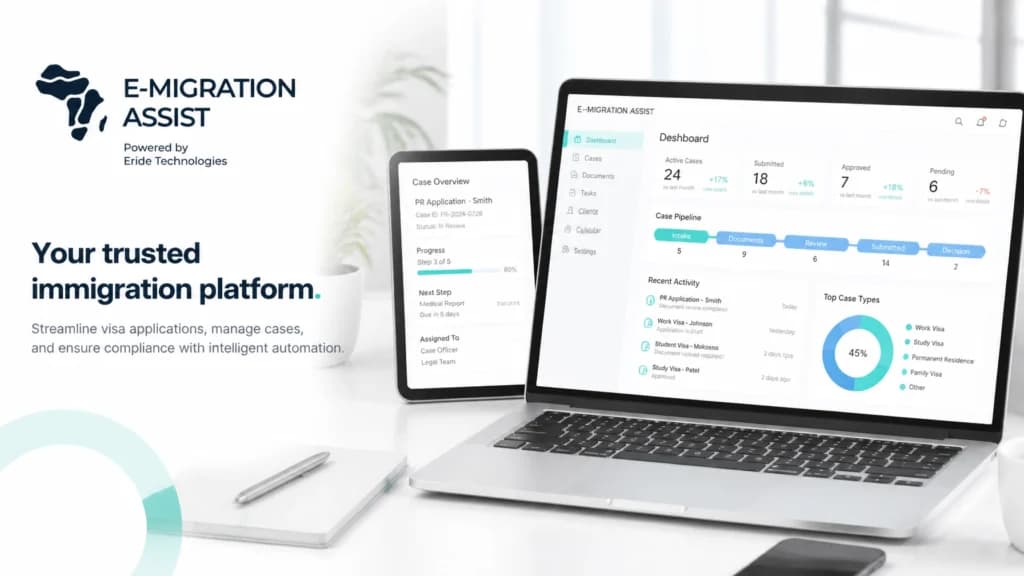
Drafted for publication on 22 August 2026
What would happen if someone asked your business to prove, file by file, why each foreign worker was hired?
Could you show:
, The person’s valid right to work?
, The role they are authorised to perform?
, The recruitment steps taken before the appointment?
, The documents retained after hiring?
, The skills that are being transferred to local employees?
If your answer depends on searching through email threads, spreadsheets, WhatsApp messages and individual employee folders, your records may not withstand scrutiny.
South Africa’s proposed foreign-worker rules are not yet in force. But the direction is clear. Employers should prepare before new obligations become operational.
What is changing, and what is not?
The Employment Services Amendment Bill, 2026, introduced in Parliament as B16–2026, proposes significant changes to the way South African employers recruit and manage foreign nationals.
The Bill is intended to give legislative effect to the National Labour Migration Policy White Paper, published by the South African Government in 2025.
However, the distinction matters:
- The National Labour Migration Policy is a policy framework.
- The Employment Services Amendment Bill is proposed legislation.
, Neither should be treated as a new quota or recruitment rule already applying to every employer.
The Bill must still pass through the parliamentary process. It must be passed, assented to and brought into operation by presidential proclamation in the Government Gazette. The Bill itself states that it will commence on a date fixed by the President by proclamation.
Until then, employers must continue complying with the laws currently in force, including the Immigration Act 13 of 2002, the Immigration Regulations and applicable employment legislation.
That does not mean businesses should wait. Good compliance takes structure. It cannot be assembled overnight.
The policy direction: controlled labour migration with clearer accountability
The National Labour Migration Policy sets out a framework for managing labour migration in a way that supports South Africa’s labour market, protects workers and addresses skills shortages.
Its central themes include:
, Giving South Africans priority where suitable skills are available.
, Allowing foreign recruitment where required skills cannot be found locally.
, Protecting foreign workers from exploitation.
, Improving cooperation between immigration, labour and employment systems.
, Supporting skills development and transfer.
The proposed Bill attempts to convert these policy objectives into enforceable duties under the Employment Services Act.
This is the key relationship:
The policy sets the direction. The Bill is intended to create the legal mechanism.
The policy does not, by itself, mean that every employer currently has a new percentage limit on foreign workers. The proposed quota system would need to be established through the legislative and regulatory process.
Proposed control 1: sector, occupation and regional quotas
The Bill proposes giving the Minister of Employment and Labour the power to set maximum quotas for the employment of foreign nationals.
A quota could apply:
- To one or more economic sectors.
- To specific occupational categories.
- Nationally.
- To particular geographic regions.
This could affect employers differently depending on their industry, location, workforce profile and occupational requirements.
For example, a future notice could focus on a particular sector experiencing high foreign-worker concentration. It could also address specific occupations or regions where labour-market conditions require additional controls.
But employers should not assume that a quota has already been imposed.
Under the Bill, a draft quota notice would need to be published in the Government Gazette. Interested parties would be given at least 30 days to comment. The Employment Services Board would consider the comments and advise the Minister before a final notice is issued.
The Bill also provides for exemptions and excludes certain small employers from the proposed quota provisions, subject to the wording of the final law and applicable notices.
The practical message is simple:
, Do not plan around an assumed quota percentage.
- Do map your workforce now so that a future quota notice can be assessed quickly and accurately.
Proposed control 2: evidence of local recruitment
The Bill proposes that an employer must satisfy itself, in the prescribed manner, that there are no other suitably skilled people in South Africa before recruiting a foreign national for a vacancy.
This is more than a general statement that a role is difficult to fill.
The proposed framework could require employers to show:
, How the vacancy was defined.
, Where it was advertised.
, How long recruitment remained open.
, Which candidates were considered.
, Why shortlisted candidates were not suitable.
, What skills were missing from the local applicant pool.
, Why the foreign national was selected.
The Bill allows for future regulations to prescribe the recruitment process. Those regulations may include the use of public employment services or private employment agencies.
This means detailed procedures may still change.
Employers should therefore avoid creating a document pack based on assumptions about forms, platforms or advertising periods that have not yet been prescribed. Instead, build a reliable evidence trail around the recruitment decision itself.
A clear recruitment record is useful even before the Bill becomes law. It supports internal governance, work visa processes, audit readiness and consistent decision-making.
Proposed control 3: skills-transfer planning
The Bill proposes that an employer prepare a skills-transfer plan for any position in which a foreign national is employed.
The Minister may exclude categories of employers, employees or workers where preparing such a plan is not practicable. Any such exclusion would need to follow the process set out in the legislation and be published in the Gazette.
Again, this is proposed. It is not yet a universal current obligation under the Bill.
Still, employers can prepare intelligently by asking:
- Which local employees should learn from the foreign worker?
- Which technical or managerial skills need to be transferred?
- What training will take place?
- Who will oversee the process?
- What milestones will show progress?
- What evidence will demonstrate that the plan was implemented?
A useful skills-transfer plan should not be a generic paragraph attached to a visa application. It should connect the foreign worker’s role to a measurable development pathway.
For example, it could include:
, A defined skill gap.
, One or more local employees as beneficiaries.
, Monthly mentoring or training activities.
, Practical work outputs.
, Review dates.
, Completion evidence.
, A responsible manager.
That structure gives the plan operational value. It also makes future reporting or review more manageable.

What employers must do now under current law
While the Bill is still proposed, current obligations remain important.
Section 38 of the Immigration Act prohibits employers from employing:
, An illegal foreigner.
, A foreign national whose status does not authorise employment.
, A foreign national working outside the terms, conditions or capacity authorised by their visa or permit.
Employers must make a good-faith effort to ascertain the person’s status and citizenship. The work authorisation should match the actual arrangement.
That means checking more than whether a document exists.
The employer should verify:
- Whether the visa or permit is valid.
- Whether it permits employment.
- Whether it covers the specific employer.
- Whether it covers the role and work conditions.
- Whether the document has expired or is subject to restrictions.
Employers must also retain prescribed records, including relevant identity, visa and employment documents. Under the Immigration Regulations, these records generally need to be kept for two years after the foreign worker’s employment ends.
Termination and certain status breaches must also be reported to the Director-General of the Department of Home Affairs.
These are current responsibilities. They should not be confused with the proposed labour-market testing, quota and skills-transfer provisions in B16–2026.
The old way versus the prepared way
The old way is familiar:
, A passport copy in an email.
, A visa document in a personal folder.
, A job description saved under a different file name.
, Recruitment evidence spread across multiple systems.
, No clear renewal alert.
, No decision log explaining why the appointment was made.
The prepared way is different:
- One structured case for each worker.
- One secure document record.
- One workflow linked to the relevant visa and employment requirements.
- One recruitment evidence trail.
- One skills-transfer plan with milestones.
- One activity and decision log.
This is not about treating proposed legislation as enacted law. It is about creating a powered foundation that can adapt when the law, regulations or sector notices change.
Could your records withstand scrutiny?
Ask yourself:
- Can we identify every foreign worker and their current work authorisation?
- Can we show that the work being performed matches the authorisation?
- Can we locate the required records without relying on one employee’s inbox?
- Can we explain the recruitment decision consistently?
- Can we identify local skills-development opportunities?
- Can we track expiry dates, changes in role and termination reporting?
- Can our law firm, immigration consultancy or HR team see the same case status?
If the answer to several questions is no, the problem is not only legal risk. It is a systems problem.
E-Migration Assist provides supportive infrastructure for employers, law firms, immigration practitioners and corporate mobility teams. The platform helps centralise sensitive documents, structure immigration workflows, track case progress and maintain decision logs.
It does not replace legal or immigration advice. It helps professional teams manage the work around that advice with greater clarity and control.

Prepare for certainty, not speculation
The proposed Employment Services Amendment Bill may change before it becomes law. Regulations may add detail. Quota notices may differ between sectors, occupations and regions. Exemptions may apply.
That uncertainty is exactly why employers should avoid informal preparation.
Do not build a compliance programme around rumours.
Build a system that can record:
- What the law currently requires.
- What the proposed Bill may introduce.
- Which obligations apply to each worker.
- Which records support each decision.
- Which actions are still pending.
The objective is not more administration. It is better control.
Less admin. More control. Better readiness for South Africa’s evolving foreign-worker and immigration compliance environment.
Start with a clearer compliance profile
Employers, professional firms and immigration consultancies can use E-Migration Assist to bring structure to their existing immigration workflows.
Request a free profile assessment and identify where your current process can become more secure, consistent and review-ready.
For professional teams, explore the E-Migration Assist infrastructure for immigration practices. For compliance information, review our Compliance and Disclaimers page.
This article is provided for general information and does not constitute legal or immigration advice. The Employment Services Amendment Bill, 2026, remains proposed legislation as at 22 August 2026. Employers should confirm current requirements with a qualified immigration professional, attorney or relevant authority before acting.
#SouthAfricaImmigration #ForeignWorkerRules #EmploymentServicesAmendmentBill #NationalLabourMigrationPolicy #WorkVisaSouthAfrica #ImmigrationCompliance #GlobalMobility #CorporateImmigration #ImmigrationTechnology #HRCompliance #E-MigrationAssist