


 Check Your Eligibility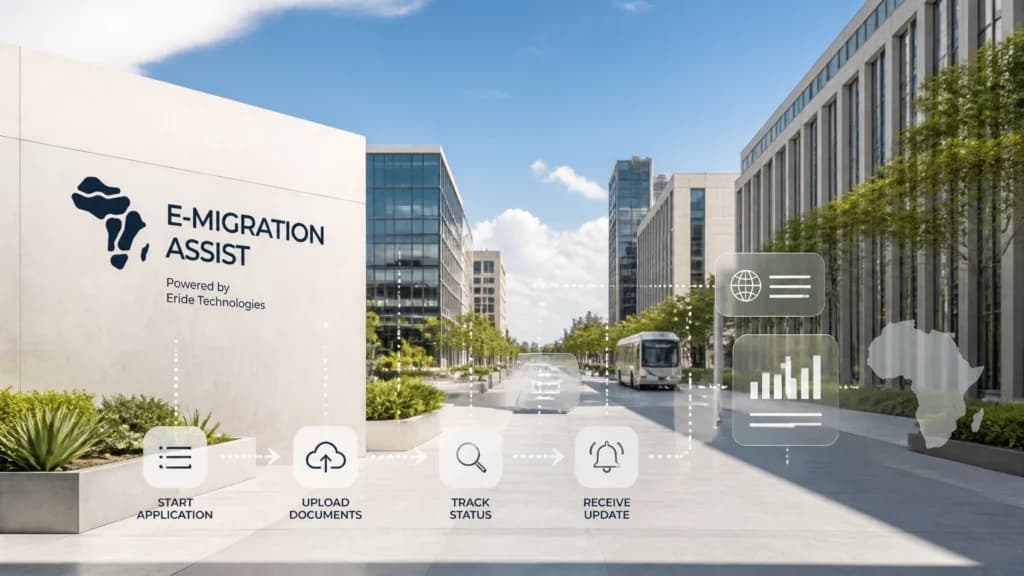
Hook caption: A digital visa journey should not leave you asking, “Did I do this correctly?” It should help you understand what you need, what happens next, and where your case stands.
Applying for a visa is not only a document exercise.
It is a personal experience.
You may be preparing to study, work, visit family, join a partner, or build a future in South Africa. The outcome matters. So does the process.
When the process is manual, fragmented, and unclear, small uncertainties become major anxieties:
: Which South Africa visa requirements apply to me?
: Have I uploaded the correct documents?
: Who has reviewed my information?
: Has my application moved forward?
: What should I do if my circumstances change?
A digital visa journey should answer these questions at the right time.
It should create structure without removing the human support that complex immigration matters require.
A digital journey begins with the right question
The old way often begins with a long list of documents.
Find a form. Search for a checklist. Download a PDF. Ask someone what “proof of financial means” means in your situation. Send documents by email. Wait for a reply.
This creates a familiar problem:
: General information instead of personal direction
: Multiple versions of the same document
: Unclear responsibility for the next step
: Advice that is difficult to revisit
: No central record of what has already happened
The new way begins with your circumstances.
Where are you applying from? Why are you travelling to South Africa? How long do you plan to stay? Are you applying for a visitor visa, study visa, work visa, temporary residence visa, or another route?
An AI-powered case management system can use these answers to structure the journey around your intended pathway.
It does not make the immigration decision. It does not replace the relevant authority. It does not remove the role of a professional adviser.
Instead, it helps organise the information that people need to make informed decisions.
- A clearer starting point
- A pathway matched to your situation
- Fewer irrelevant instructions
- A record of the information provided
The result is simple: less uncertainty at the beginning and more control throughout the process.

“What do I need?”
This is usually the first practical question.
South Africa visa requirements depend on your nationality, purpose of travel, intended duration, and visa category. A short visit can involve different requirements from a work or study application.
For a standard visitor visa, official guidance may include requirements such as:
: A valid passport or travel document
: At least two unused passport pages
: Passport validity extending beyond the intended departure date
: The prescribed visa application form
: Passport photographs
: Proof of the purpose and duration of the visit
: Proof of financial means
: A return or onward ticket, where applicable
: A yellow-fever certificate, where applicable
: Additional documents for minors
Longer-term applications may require further evidence. This can include medical reports, police clearance certificates, employment documents, proof of enrolment, or category-specific supporting information.
The important point is that a list alone is not enough.
A useful digital experience should explain:
- Why a document is needed
- Which person must provide it
- What makes it acceptable
- Whether it has been received
- Whether it still needs review
- What happens if it is missing
That is the difference between document storage and document guidance.
With immigration case management software, each document can be connected to a particular case stage. The user is not left to guess where a file belongs or whether an upload has been completed.
The system turns a confusing document pile into a visible checklist.
“What happens next?”
A digital visa journey should not end after upload.
Many applicants become anxious after submitting documents because the process goes quiet. They may receive an automated email, but still not know what it means. They may see a status such as “under review” without understanding the practical implication.
A structured experience makes the next stage visible.
For example, a journey may move through stages such as:
- Initial assessment
- Visa pathway identification
- Requirements checklist
- Document collection
- Document review
- Application preparation
- Submission or professional handoff
- Awaiting an outcome
- Decision logging
- Next-step guidance
Each stage answers a different user need.
: Before submission: “Am I ready?”
: During review: “What still needs attention?”
: After submission: “Where is my case?”
: After a decision: “What does this mean for me?”
This is where a system provides reassurance through visibility.
It does not promise approval. It does not promise a specific processing time. It provides a reliable record of the work completed and the work still outstanding.
That distinction matters.
“Who reviewed this?”
Technology should improve confidence, not create a black box.
People want to know whether an uploaded document was accepted, whether a missing item was identified, and whether someone has checked the information properly.
AI can assist by:
- Identifying missing information
- Grouping documents by case requirement
- Flagging inconsistencies for attention
- Summarising case activity
- Generating reminders
- Showing the next workflow step
But AI-assisted guidance should operate within a controlled workflow.
Professional advisers remain essential when a matter requires interpretation, strategy, or legal expertise. Immigration practitioners, attorneys, and corporate mobility professionals bring context that automated systems cannot replace.
The better model is collaborative:
: AI organises the information
: The workflow creates consistency
: A professional reviews the relevant matter
: The applicant receives clear guidance
: The appropriate authority makes the final determination
E-Migration Assist is designed as immigration infrastructure for this relationship. It is not a government platform. It is not a substitute for a law firm or immigration consultancy.
It provides a structured environment where individuals and professional teams can manage case information, documents, requirements, and progress with greater clarity.
“Where is my case?”
Searching through old emails is not visa tracking.
A message that says “your application has been submitted” is useful. It is not a complete view of the journey.
For applicants using an official digital visa channel, status information should be checked through the relevant official portal. For applications lodged through a visa facilitation centre, tracking normally depends on the reference number and channel provided at submission.
The official South African Department of Home Affairs visa guidance and government visa information should remain the source of truth for current requirements and application channels.
For eligible digital travel authorisation applications, applicants should consult the official South Africa ETA portal. For applications handled through VFS Global, use the relevant VFS South Africa information and tracking channel.
E-Migration Assist does not replace official visa tracking South Africa channels. It adds operational visibility around your own case.
That can include:
- The documents you have uploaded
- The items still outstanding
- Review activity
- Internal case notes
- Submission records
- Decisions and next actions
This creates an important separation:
Official channels show the authority’s application status. A case management system shows whether your own preparation and follow-up are under control.

“What if something changes?”
Immigration journeys rarely remain static.
Your employment may change. Your course may be deferred. Your passport may be renewed. Your travel dates may move. A supporting document may expire. A new policy or operational instruction may affect the route you are considering.
The manual response is usually a chain of emails.
The structured response is a controlled update.
A digital case management system can help record:
: What changed
: When it changed
: Which documents are affected
: Who needs to review the change
: What action is required next
This is particularly valuable for professional firms and corporate mobility teams managing multiple applicants.
One client’s changed travel date should not disappear in an inbox. One employee’s updated passport should not be confused with another employee’s file. One policy update should not require an entire spreadsheet to be rebuilt manually.
A central workflow creates continuity.
It also supports better conversations between applicants and their advisers. Instead of asking, “What was the last version?”, everyone can work from the same structured case record.

What should the experience feel like?
A good digital visa journey should feel:
- Clear, because the next step is visible
- Structured, because requirements are organised
- Human, because professional review remains available
- Private, because sensitive documents need careful handling
- Reliable, because activity and decisions are recorded
- Flexible, because cases can change without losing history
It should not feel like another form.
It should feel like a controlled process.
For the individual traveller, that means fewer unanswered questions and a more confident application journey.
For the immigration professional, it means less time spent searching, chasing, renaming, and reconciling documents.
For the corporate mobility team, it means a repeatable operating structure across employees, locations, and visa categories.
The technology is not the destination. It is the powered foundation that supports accuracy, compliance, communication, and control.
Start with clarity
If you are planning a move to South Africa, begin by understanding your likely immigration pathway and the information your case requires.
If you manage applications for clients, employees, or families, create a workflow that makes responsibilities and progress visible.
Use the official sources for current requirements and submission instructions. Use structured case management to organise the work around them.
Start your structured immigration assessment with E-Migration Assist.
A better visa journey is not about removing people from the process.
It is about giving every person the right information, at the right stage, with a clear record of what happens next.
Less admin. More control. A more confident digital visa journey.
#SouthAfricaVisa #SouthAfricaVisaRequirements #VisaTrackingSouthAfrica #ImmigrationCaseManagementSoftware #DigitalVisa #GlobalMobility #ImmigrationTechnology #VisaApplication #SouthAfricaImmigration #LegalTech